

We are seeing a big change in mobile tech, thanks to android’s growth from cupcake to android 14. Looking at android’s history, we see each version adding new features. These updates have made using android better and better.
It’s important to understand android’s growth to see its big impact on mobile tech. By looking at android’s updates and versions, we learn about its development. In this article, we’ll explore the key moments that have shaped android from cupcake to android 14.
Key Takeaways
- The evolution of android has transformed the mobile technology landscape.
- Each new version of android has incorporated significant updates and improvements.
- Understanding the history of android versions is essential in appreciating its impact on mobile computing.
- The journey from cupcake to android 14 has been marked by numerous milestones and developments.
- The evolution of android has been driven by android os updates that enhance the user experience.
- The history of android versions provides valuable insights into the development of this operating system.
Understanding Android’s Journey in Mobile Technology
Exploring android software development, we must look at the android version timeline. This timeline shows how Android has grown in mobile technology. It covers the birth of Android OS, Google’s role, and the naming changes.
These events are key to Android’s success. Each new version brings new features and improvements. This evolution has made Android a leading mobile operating system.
We’ll dive into Android’s history, from its start to now. Knowing the android version timeline helps us see the hard work behind Android’s success.
The Birth of Android OS
Android OS’s birth started a new chapter in mobile tech. It was the first step in Android’s growth, driven by Google’s vision and the software development process.
Google’s Acquisition and Vision
Google’s buyout of Android was a turning point. Google’s vision has led Android’s evolution and software development.
The Naming Convention Evolution
Android’s version names, inspired by desserts, are unique. This naming style adds fun and creativity to each version. It’s a big part of Android’s growth and software development.
The Evolution of Android: From Cupcake to Android 14
The journey of Android is filled with big milestones and new ideas. It started with Cupcake and has grown to Android 14. Each step has changed how we use mobile technology. We’ll look at the main updates and how they’ve made Android better.
Android has always been getting better, with each version adding new things. This has improved how fast it works, how safe it is, and how easy it is to use. Looking back, we see a pattern of getting better with each update. This shows how Android has kept up with what users want and new tech.
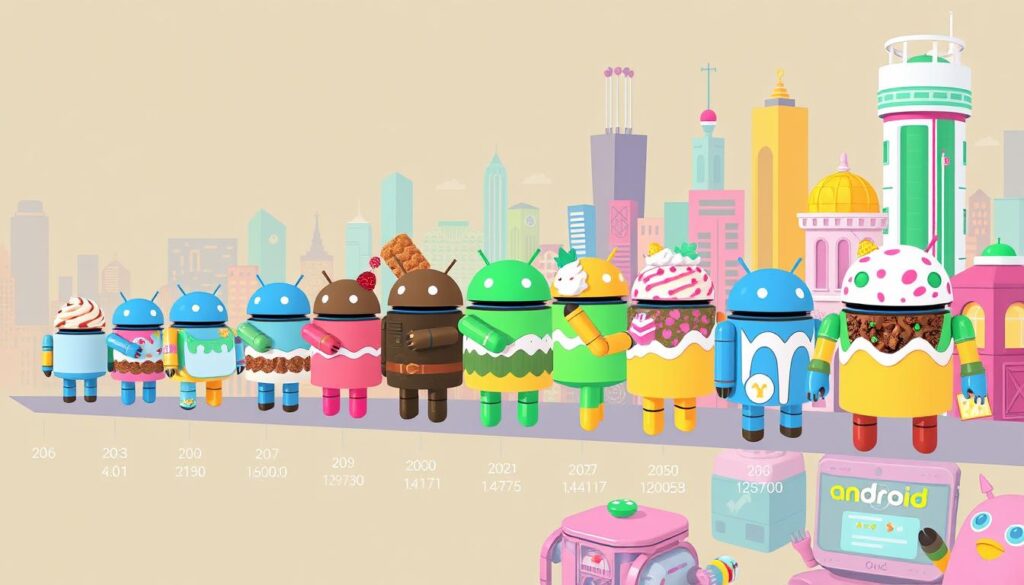
By looking at Android’s history, we understand how it has changed. From Cupcake to Android 14, new trends have shaped mobile tech. As we dive deeper, we’ll see the key features and improvements that have made Android what it is today.
The android operating system history is a testament to the power of innovation and continuous improvement, with each new version building on the previous one to create a more robust and user-friendly operating system.
Early Android Versions: Cupcake Through Ice Cream Sandwich
We will look at the early Android versions, from Cupcake to Ice Cream Sandwich. We’ll see their key features, updates, and improvements. This time was key in Android’s history, setting the stage for its success.
During this era, Android got updates often. Each update brought big improvements to users. The early versions had challenges, but updates fixed these issues.
Cupcake to Donut: The Foundation Years
The first Android versions, Cupcake and Donut, brought basic features like widgets and video recording. These years were vital in building Android’s core.
Eclair to Froyo: Expanding Capabilities
Later, Eclair and Froyo added more features, like Microsoft Exchange support and HTML5. These updates showed Android’s growth into a powerful mobile OS.
Gingerbread to Ice Cream Sandwich: Refining the Experience
Gingerbread and Ice Cream Sandwich made the user experience better. They introduced a new interface and improved performance. These updates were a big step forward in Android’s history.
The Material Design Era: Jelly Bean to Marshmallow
We are now entering the Material Design era, a significant phase in the android platform evolution. This period, from Jelly Bean to Marshmallow, saw a major change in Android’s look and feel. Material Design brought a fresh, modern look, focusing on simplicity, clarity, and consistency.
This era was key in making Android a major player in the mobile market. The updates improved performance, security, and functionality. They helped refine the user experience and solidified Android’s market position. With each new release, Android evolved, adding user feedback and innovative features to stay ahead.
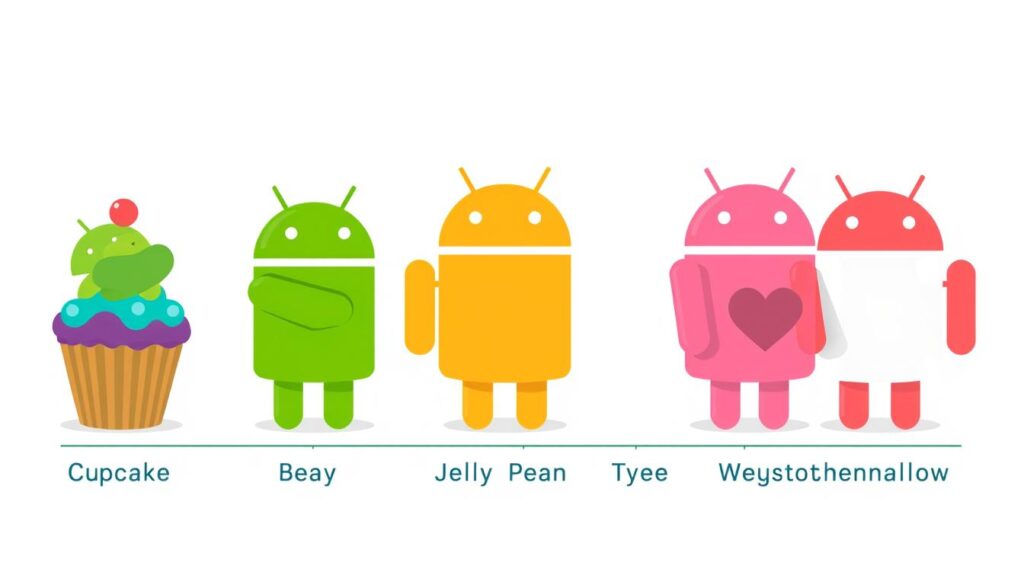
The Material Design era was a time of growth and development for Android. Its impact is seen in the current android version timeline. Looking back, Material Design’s introduction was a turning point in Android’s history. It set the stage for future innovations and advancements in the android platform evolution.
Major Breakthroughs: Nougat Through Pie
We will explore the major advancements in Android’s history, from Nougat to Pie. These changes greatly improved Android’s abilities and user experience. Android updates were key, adding new features and enhancements with each version.
Multi-window support was introduced, changing how users interact with their devices. This feature, along with better security, made Android more reliable. Developers also got new tools and APIs, helping them create better apps.
AI and neural networks were integrated, allowing devices to learn from users. This made Android more personal. Gesture navigation was also introduced, making interaction more intuitive.
Multi-Window Support and Enhanced Security
Multi-window support was a big step, letting users run many apps at once. It made Android better for both personal and work use, thanks to improved security.
AI Integration and Neural Networks
AI and neural networks were added, making devices smarter. They could learn and adapt to user habits. This led to a more tailored experience, with devices better at meeting user needs.
Gesture Navigation Introduction
Gestures changed how we use our devices. This, along with other updates, made Android more user-friendly.
The impact of these developments on android software development was significant, enabling developers to create more sophisticated and user-friendly applications. As we look back on this era, it is clear that these breakthroughs played a critical role in shaping the Android operating system into what it is today.
The Modern Era: Android 10 to 12
We are now in the modern era of Android, from version 10 to 12. This time has seen big steps forward in android development trends. We’ve seen better performance, security, and functionality.
One big change is the better user experience. New features like dark mode and gesture navigation make things smoother. Also, there’s better support for artificial intelligence and machine learning. This lets developers make more advanced and personal apps.
Looking ahead, android development trends will keep changing the mobile world. With 5G, foldable devices, and augmented reality, the future is full of possibilities. The android platform evolution will help make these technologies a reality, and we’re excited to see what’s next.
The future of Android is bright, with a focus on innovation, security, and user experience. As we continue to push the boundaries of what is possible, we can expect to see even more exciting developments in the world of android development trends and android platform evolution.
Latest Innovations: Android 13 and 14
We’re excited to dive into the latest Android innovations. We’ll look at android software updates and their role in Android’s history. Android 13 and 14 have brought big changes, starting a new chapter for Android.
These updates focus a lot on privacy and security. They’ve added new ways to keep user data safe, making Android more secure. AI and machine learning are also key, making Android more intuitive and personal.
Android 13 and 14 also improve how users experience Android. They have a new interface and work faster, making Android smoother and more efficient. These updates are a big step forward in Android’s history.
Enhanced Security Features
The latest Android updates have strong security features. They add extra protection for user data. This shows Android’s ongoing effort to make the system safer and more reliable.
AI-Powered Capabilities
Android 13 and 14 use AI and machine learning for new features. They offer predictive text and personalized suggestions. These updates change how we use our devices, starting a new era in Android updates.
Impact on Mobile Computing and Development
The android operating system history has seen big changes, shaping mobile tech. Each new version brings new features and better performance. This has made android a top choice for users and developers.
Android’s history shows the strength of teamwork and new ideas. Looking at today’s mobile world, android’s role is clear. It has greatly influenced the industry.
Market Share and Global Adoption
Android’s global use has grown a lot, with a big share in mobile OS market. This growth comes from android’s constant improvement. It’s now a favorite for both users and developers.
Developer Ecosystem Evolution
Android’s history has also grown the developer community. There are many tools and resources now. This lets developers make new and exciting apps, boosting android’s growth.
Conclusion
Looking back, Android’s journey from Cupcake to Android 14 is truly impressive. It has changed the mobile world and pushed tech forward. Android’s growth shows its power in changing how we use technology.
The evolution of Android: from Cupcake to Android 14 shows Google’s drive for new ideas. Each update has brought new features, better security, and smoother interfaces. This makes Android a top choice for smartphones.
What’s next for android os updates? We expect more cool stuff, like AI and better mobile experiences. Android’s ongoing updates will keep changing how we use our devices.
In summary, Android’s journey is amazing, and we’re excited for what’s next. As it meets new user needs and tech changes, Android will keep leading the way. It will shape our mobile future.
FAQ
What is the history of Android versions?
Android started with Cupcake (version 1.5) and has grown a lot. Each year, a new version comes out, named after desserts. We’ve seen Donut, Eclair, Froyo, and many more, like Gingerbread and Honeycomb.
Then came Ice Cream Sandwich, Jelly Bean, and KitKat. Later, we had Lollipop, Marshmallow, and Nougat. Oreo, Pie, Android 10, Android 11, and Android 12 followed. Now, we have Android 14.
How has Android’s development history shaped the mobile technology landscape?
Android’s growth has changed mobile tech a lot. Every new version brings cool features and better performance. This makes the mobile world more competitive and innovative.
Being open-source, Android also helps developers a lot. This leads to more apps and ways for users to customize their phones.
What are the key milestones in Android’s history?
Android’s big moments include Cupcake, which started it all. Then, Google bought Android, giving it the push it needed. The Material Design era changed how Android looks and feels.
Recently, Android has focused on AI, better navigation, and more privacy and security. These steps have made Android a leader in mobile tech.
How have Android’s software updates and version releases impacted its development?
Regular updates and new versions have been key for Android. Each one brings big improvements, like better performance and security. These updates keep Android ahead in the mobile world.
They help meet user needs and keep up with market changes. This makes Android a top choice for mobile users.
What are the latest innovations in Android?
Android 13 and Android 14 have brought many new things. There’s better privacy and security, more AI, and improved user experience. These updates show Android’s dedication to being the best mobile platform.


13 Comments on “The Rise of Android: Cupcake to Android 14”